Wrapped up a fantastic session today: 𝗗𝗚𝗧 𝟭𝟬𝟵𝘃: 𝗙𝗿𝗮𝘂𝗱 𝗗𝗲𝘁𝗲𝗰𝘁𝗶𝗼𝗻 𝘄𝗶𝘁𝗵 𝗔𝗜 𝗮𝗻𝗱 𝗘𝘁𝗵𝗶𝗰𝗮𝗹 𝗢𝘃𝗲𝗿𝘀𝗶𝗴𝗵𝘁 for ISCA.
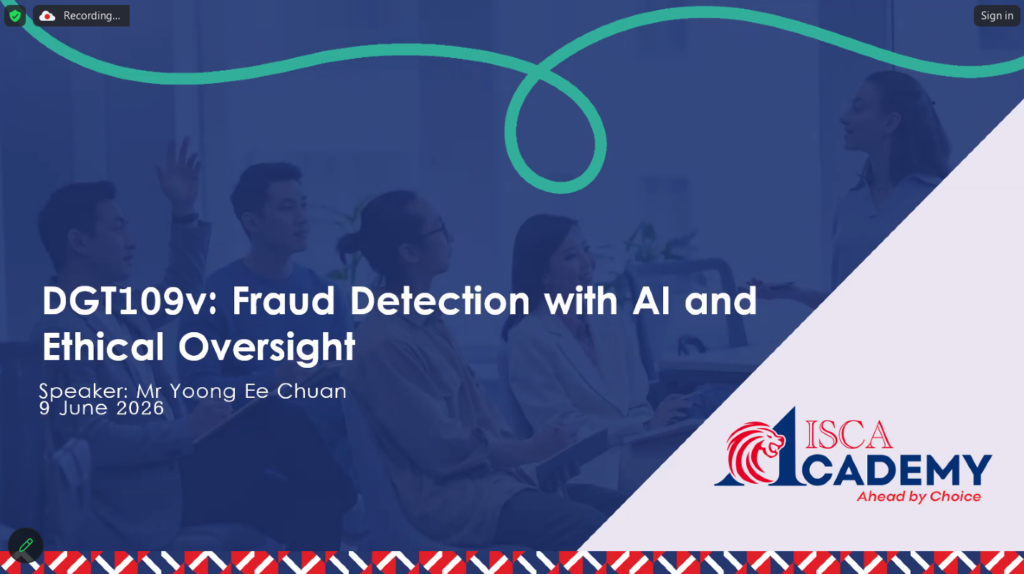
What struck me most was how the class came alive through the learning activities. We didn’t just cover theory as participants worked through Benford’s Law anomaly hunts on real transaction data, watched videos on deepfake scams (including one impersonating a sitting Prime Minister), saw a live demo of an AI scam detection app, and debated where professional judgment ends and algorithmic output begins.
That mix of hands-on practice, real-world cases, and live tools made for a room that was genuinely switched on from start to finish.
A few themes that sparked the most discussion:
🔺The fine line between using AI as a support tool versus delegating judgment to it
🔺What “responsible prompting” actually looks like in an investigation context
🔺The compliance implications of feeding sensitive data into public AI platforms
Appreciated the participation of the 50 participants for the inaugural run of this new program.
No responses yet